
 EN
 AR
 FR
 DE
 HI
 IT
 JA
 KO
 PT
 RU
 ES
 ID
 LV
 VI
 HU
 MS
 GA
 BE
 YI
 EU
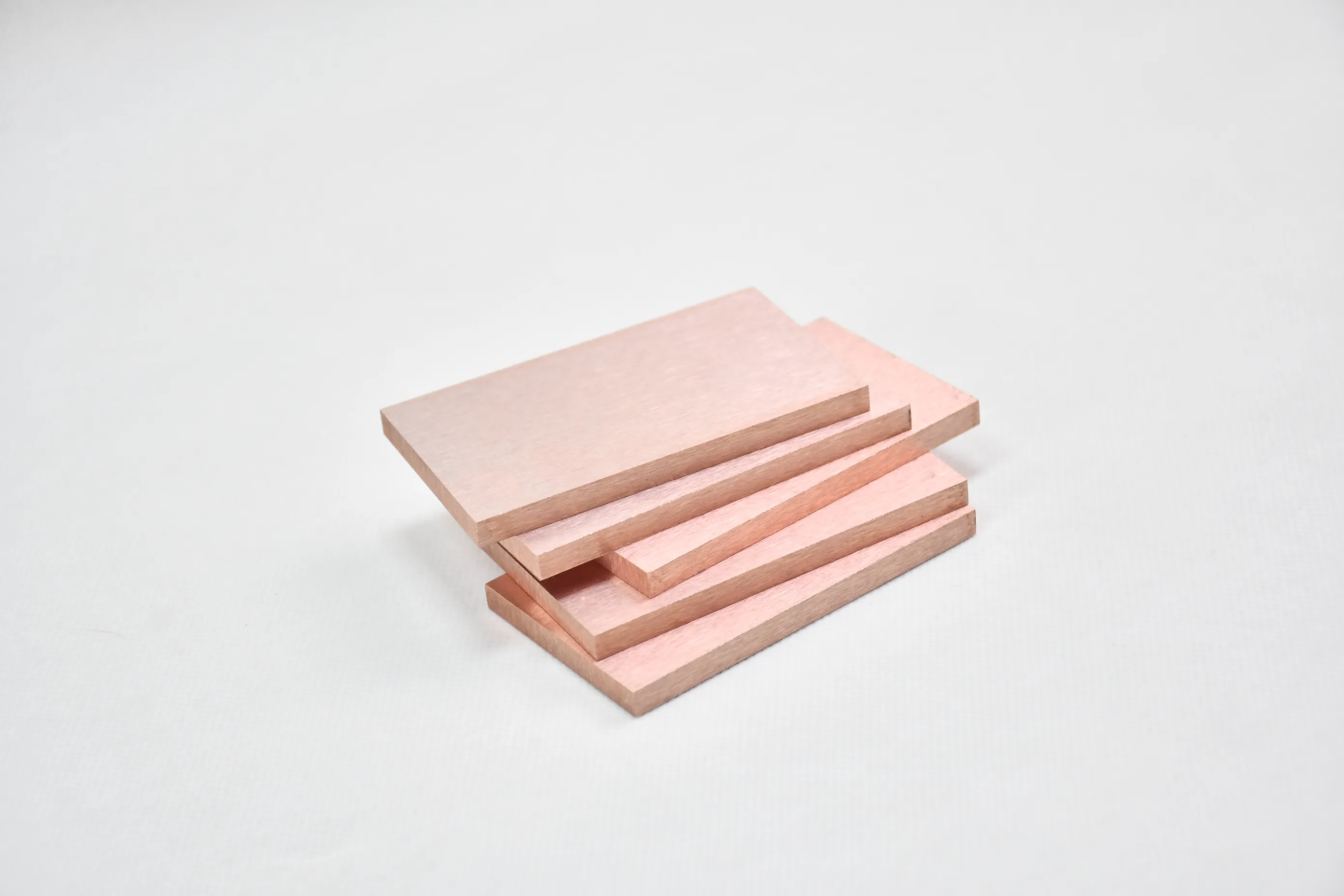
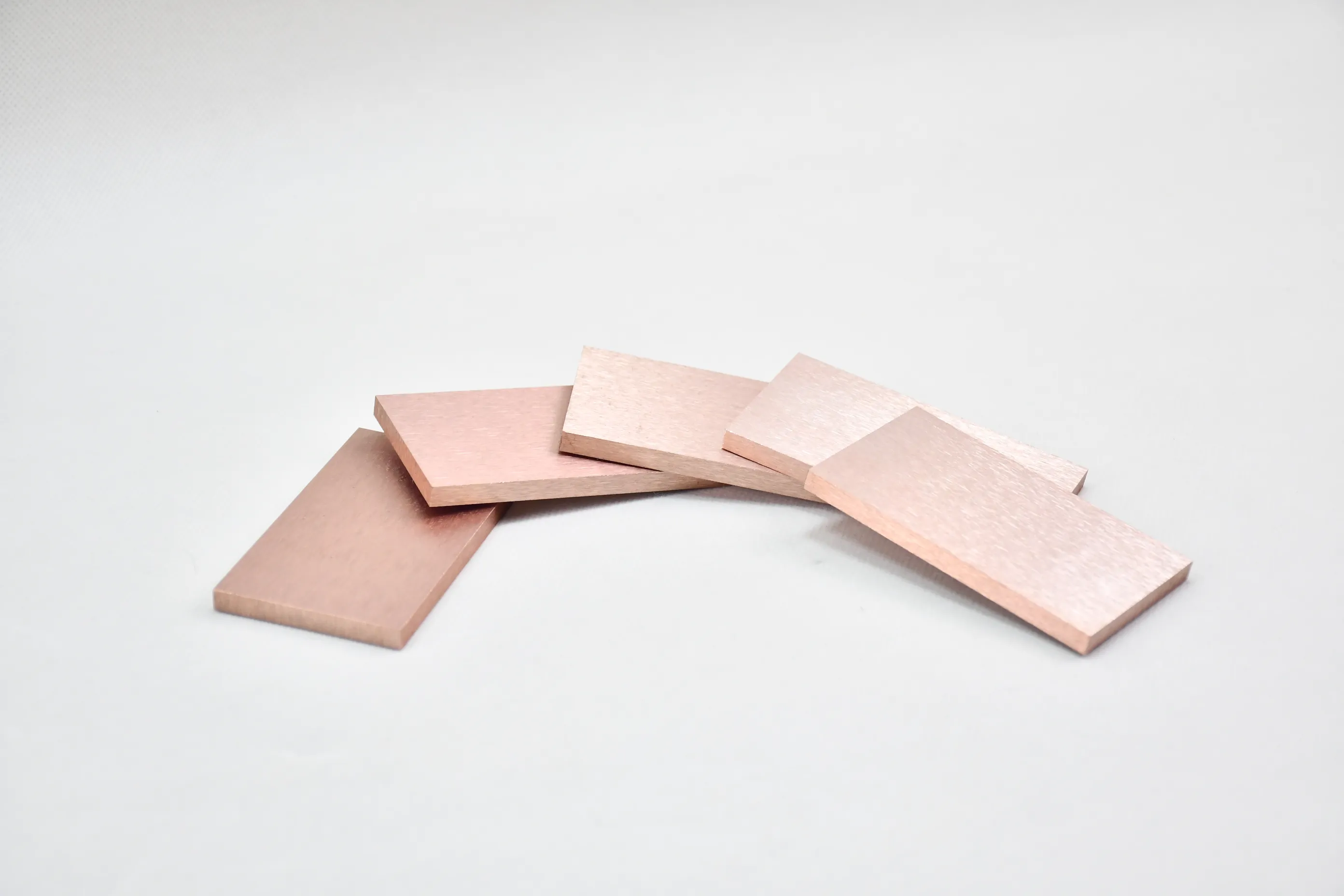
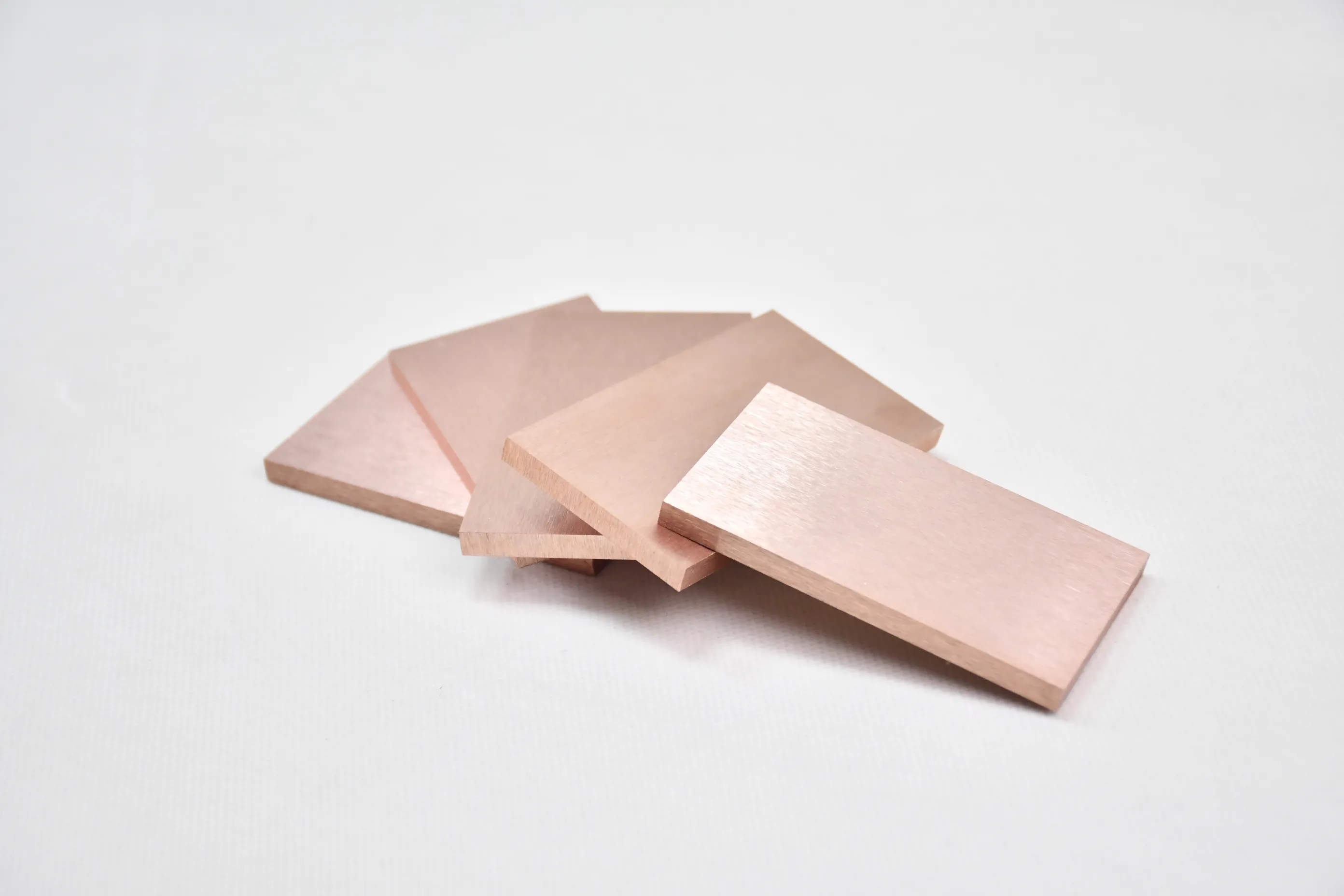
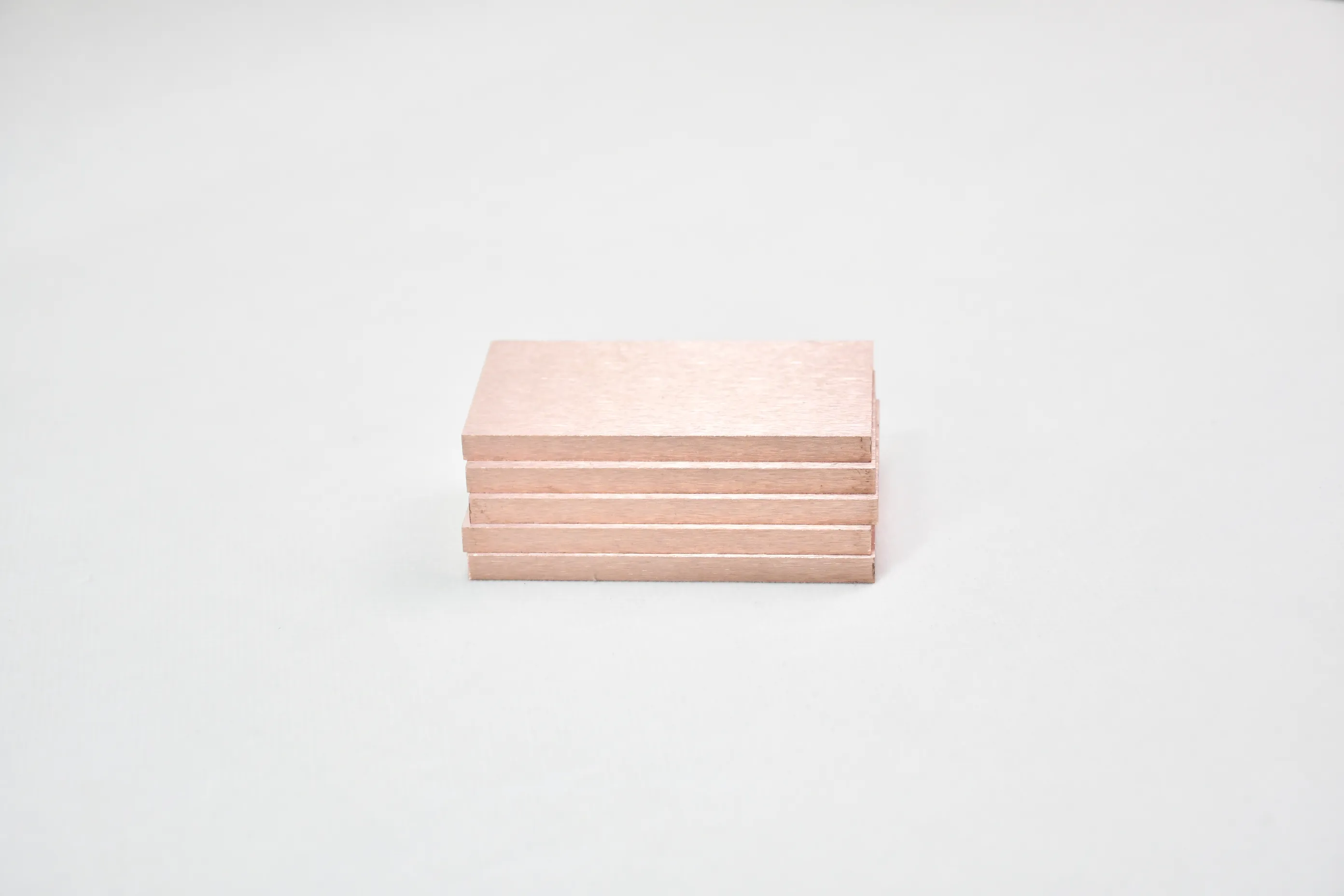
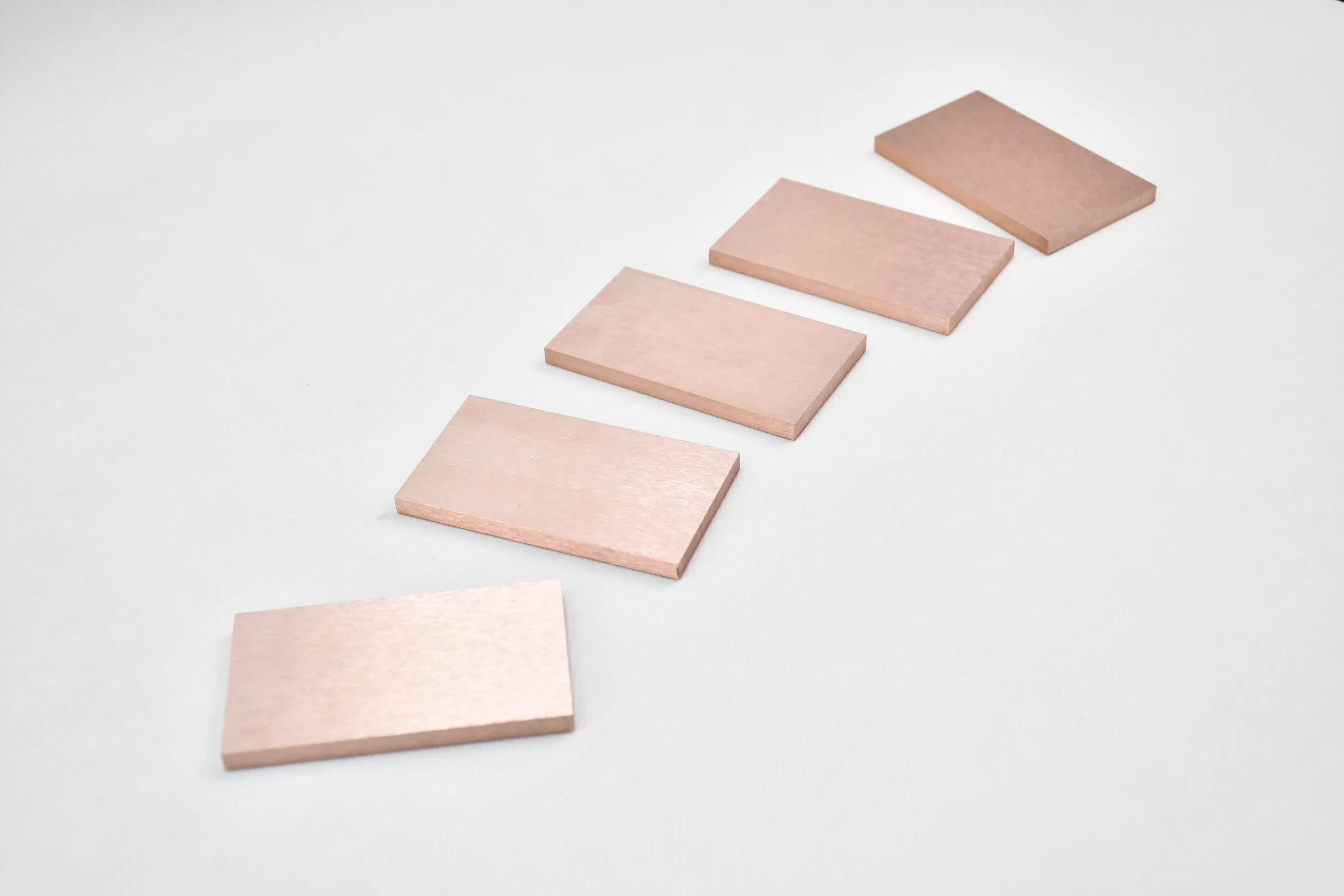
Tungsten Copper Alloy WCu50–WCu90 | EDM Electrode, HV Contact & Heat Sink Supplier
| Payment method | By T/T |
| Incoterm | FOB,CIF,EXW,FCA,Express Delivery |
| Min. Order | 10pcs or Communication and negotiation |
| Transportation | Ocean,Air,Express,Truck |
| Packing | Standard export packing,tailor-made packaging |
Attributes
| Specification | |
| Model No. | JDTG-WCu-008 |
| Brand | ZZJD |
| Place Of Origin | China |
| Diameter | 88*50*6.1mm, Support customization |
| Material | CuW50 |
| Density | 11.85±0.15g/cm³ |
| Surface | Polished |
| Standard | GB/T 8320,ASTM B702 |
| Product quality guarantee | Third-party material testing certificate COA,CO,COC,Inspection certificate3.1/EN10204 report etc. Provide according to requirements etc. |
| Factory qualification certification | ISO9001,ISO45001,ISO18001,ISO13485,RoHS certification,REACH certification |
PACKAGING & DELIVERY
| Selling Units | Kilogram, piece |
| Package Type | Standard export packing (Cartons, wooden boxes, iron drums, vacuum package, support customization packaging etc.) |
DESCRIPTION
Tungsten Copper Alloy (WCu / CuW)
Copper and tungsten do not dissolve into each other. That is exactly why they work so well together. Made by pressing a tungsten skeleton and infiltrating it with copper under vacuum, WCu keeps the refractory side of tungsten — high melting point, hardness, arc resistance, low expansion — and borrows copper's conductivity for heat and current. The result is a single material that survives switching arcs and moves heat away far faster than steel or copper alone.
Zhuzhou Jiuding Metal Technology runs the full WCu range, from WCu70 through WCu90, and machines it into blocks, thick plates, rods, rings, shaped electrodes and finished components. Give us a drawing and we will hold your dimensions, tolerances and surface finish, whether the part is an EDM electrode, a vacuum interrupter contact or a heat spreader behind a power device.
Why Designers Specify WCu?
• It takes the arc, not the damage. At switching temperatures the copper phase vaporises and pulls heat out of the strike zone while the tungsten skeleton stays intact. Contacts resist welding and keep their shape through repeated make-break cycles.
• Conductivity you can dial in. Move the W/Cu ratio and thermal and electrical conductivity follow. That lets you tune a part to the heat load it actually sees.
• Expansion matched to ceramics and silicon. Low, predictable CTE keeps joints sound against AlN, SiC and silicon through thermal cycling.
• Machinable to real part geometry. Milling, drilling and grinding all work, so complex electrode shapes and fine heat-sink features are achievable, not theoretical.
• Consistent from piece to piece. Vacuum infiltration leaves a dense, uniform structure without porosity or copper segregation, which keeps your process repeatable batch after batch.
• Built to your specification. Ratio, size, tolerance and finish are all open. Samples, pilot runs and full export orders are equally welcome, each with a COA.
Copper-Tungsten Grade and Properties (GB/T 8320)
|
Name |
Code |
Chemical component % |
Mechanical and physical properties |
|||||
|
Copper |
Total impurities≤ |
W |
Density g/cm³≥ |
Hardness HB≥ |
Electric conductivity %IACS ≥ |
Bending resistance MPa ≥ |
||
|
铜钨(50) |
CuW(50) |
50±2.0 |
0.5 |
Balance |
11.85 |
115 |
54 |
一 |
|
铜钨(55) |
CuW(55) |
45±2.0 |
0.5 |
Balance |
12.30 |
125 |
49 |
一 |
|
铜钨(60) |
CuW(60) |
40±2.0 |
0.5 |
Balance |
12.75 |
140 |
47 |
一 |
|
铜钨(65) |
CuW( 65) |
35±2.0 |
0.5 |
Balance |
13.30 |
155 |
44 |
一 |
|
铜钨(70) |
CuW(70) |
30±2.0 |
0.5 |
Balance |
13.80 |
175 |
42 |
790 |
|
铜钨(75) |
CuW(75) |
25±2.0 |
0.5 |
Balance |
14.50 |
195 |
38 |
885 |
|
铜钨(80) |
CuW(80) |
20±2.0 |
0.5 |
Balance |
15.15 |
220 |
34 |
980 |
|
铜钨(85) |
CuW(85) |
15±2.0 |
0.5 |
Balance |
15.90 |
240 |
30 |
1080 |
|
铜钨(90) |
CuW(90) |
10±2.0 |
0.5 |
Balance |
16.75 |
260 |
27 |
1160 |
|
Note: The conductivity %IACS is based on the resistivity of international standard soft copper (i.e., annealed copper), which is 1.7241 μΩ · cm, and is defined as 100% conductivity. |
||||||||
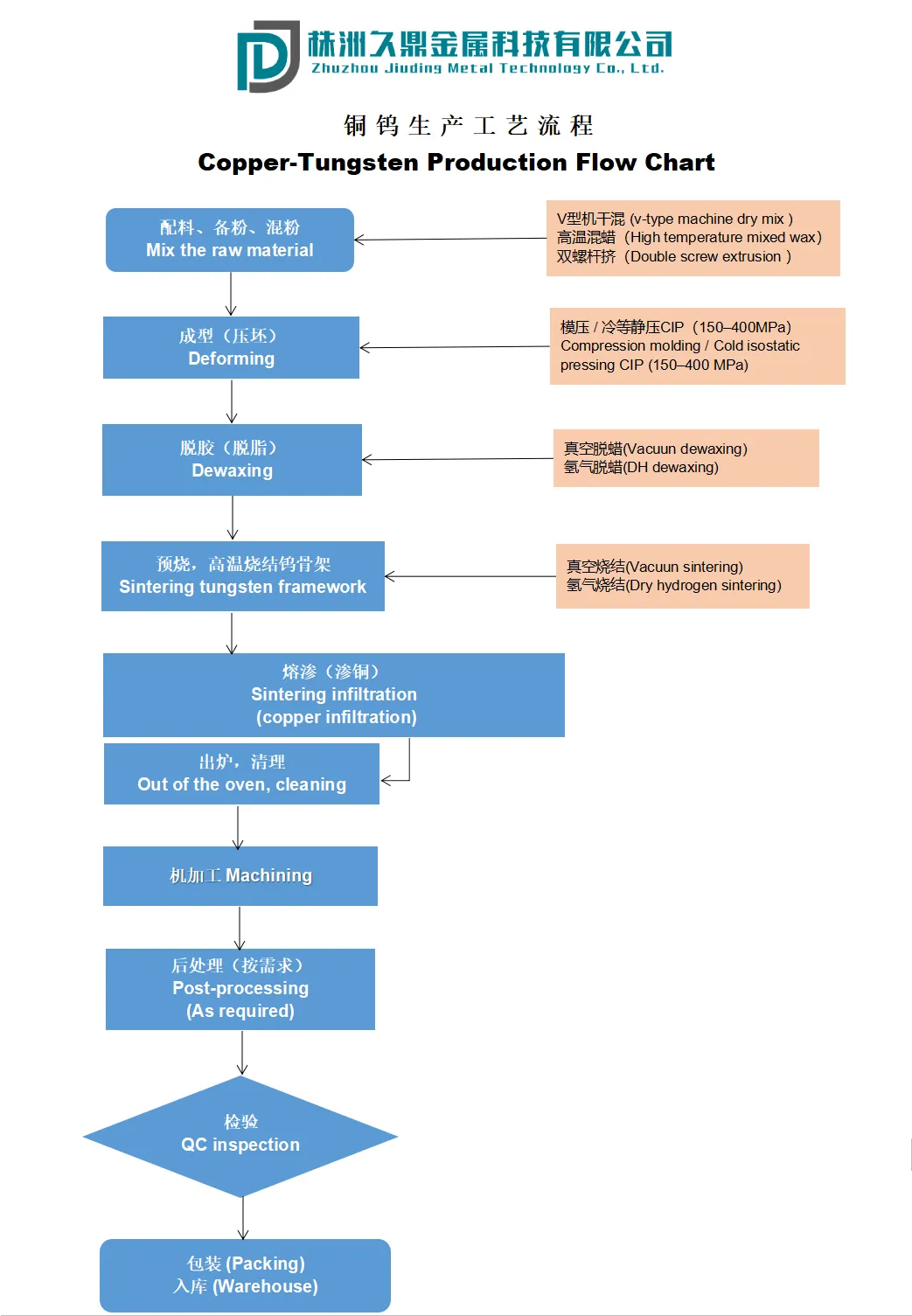
Tungsten copper alloy production flow chart of Zhuzhou Jiuding metal
Choosing a Grade
• WCu70 — where heat has to go somewhere fast: semiconductor heat sinks, resistance welding tips.
• WCu75 / WCu80 — the workhorses, and what most EDM and medium-duty contact jobs ask for.
• WCu85 / WCu90 — where the arc hits hard: high voltage, heavy current, severe erosion duty.
Forms and Tolerances
• Block and plate: milled or ground faces, cut to your size, thickness from 2 to 60 mm.
• Rod: Ø2–150 mm, cut to length, ground OD.
• Ring, step and shaped electrodes: pressed or machined to drawing.
• CNC finished parts: tolerances down to ±0.01 mm.
• Surface: as-sintered, milled, ground or mirror polished.
Typical Applications of tungsten copper alloy
1. EDM electrodes for carbide, HSS and hardened molds, where low wear keeps edges sharp through the run.
2. Vacuum interrupters and switchgear: contacts and arc-extinguishing parts that hold up under repeated arcing.
3. Power electronics and RF: heat sinks and spreaders matched to ceramic and silicon packages.
4. Resistance welding: electrodes and caps that resist mushrooming and sticking.
5. Discharge and plasma devices: electrodes and high-temperature conductive parts, including aerospace hardware.
Quality, Documentation and Packing
Every batch follows the same route: powder pressing, tungsten skeleton sintering, then vacuum copper infiltration. With the parts you can have a COA, a metallographic report and a dimensional inspection report. Export packing is anti-rust vacuum bag inside a fumigated wooden case, ready for sea freight.
We also supply tungsten heavy alloy (WNiFe), pure tungsten plate and rod, radiation shielding components and tungsten nozzles, so mixed orders can ship together.
FAQ
Is WCu the same as tungsten heavy alloy?
No. WCu is built for current and heat, and for surviving arcs. WNiFe is a dense shielding alloy for radiation work. Choose by function: conductivity and erosion duty point to WCu, attenuation points to WNiFe.
Can WCu be used for radiation shielding?
Only marginally. Its attenuation sits well below WNiFe, so for shielding projects we steer customers to tungsten heavy alloy instead.
Can you machine to our drawing?
Yes. Send the drawing with tolerances and finish, and we will quote the grade, the blank size and the machining route.


